
Introduction
Welcome to the Mayan Digital Library, a living archive dedicated to preserving and sharing the vast knowledge systems of the Mayan civilization. This platform is designed to make learning intuitive and layered — starting with broad themes and guiding you toward specific discoveries. Whether you’re a student, a researcher, or simply curious, this is your starting point to explore the brilliance of Mayan science, language, cosmology, and culture.
The Mayan nahual, also written nawal or nagual, is a central concept within Mesoamerican worldviews, representing a day-sign or spiritual companion associated with a person’s birth date in the 260-day sacred calendar known as the Tzolk’in or Cholq’ij. This system remains in use among contemporary Maya communities, particularly in Guatemala and southern Mexico. The Nahual defines energy patterns for individuals born on specific days, influences daily ceremonies, and guides the community in agricultural, social, and spiritual practices. Each of the twenty Nahuales corresponds to a specific day in the Tzolk’in cycle, carrying unique attributes, governing elements, and symbolic meanings. The tradition recognizes the intrinsic connection of human beings to nature, animals, the cosmos, and ancestral energies, forming a living wisdom system that continues to inform healing practices, personal development, and communal harmony.
Historically and linguistically, the term nahual, nawal, or nagual refers to a spiritual force associated with particular calendar days and, by extension, with persons born on those days. Within Maya calendrical practice, each day possesses an intrinsic energy, which is combined with a number from one to thirteen to form one of 260 unique day-energies. These day-energies are utilized in ritual life, divination, naming, and social decision-making across many Maya communities. The concept and practice of the Nahual vary regionally and historically, with differences in linguistic forms and ritual application across K’iche’, Kaqchikel, Yucatec, and other Maya languages and communities. In K’iche’ and Kaqchikel, the calendar is often referred to as Cholq’ij or Aj ilabal q’ij, whereas in Yucatec and Western academic contexts, it is known as the Tzolk’in. The term nahual itself functions as a loanword in several Maya languages, carrying local meanings of spirit, guardian, or day-force.
The twenty Nahuales used in contemporary reconstructions and daykeeping are Imix (crocodile/waterlily, representing origins and emergence), Ik’ (wind/breath, symbolizing communication and movement), Ak’b’al (night/house of night, associated with dreams and inner seeing), K’an (maize/ripening, signifying abundance and prosperity), Chikchan (serpent, vitality and life energy), Kimi (death, endings and ancestor contact), Manik’ (deer, stewardship and community), Lamat (star/Venus, fertility and timing), Muluk (water, purification and emotion), Ok (dog, guidance and guardianship), Chuwen (monkey/artisan, creativity and craftsmanship), Eb’ (road/grass, path and health), B’en (reed/maize shoot, growth and authority), Ix (jaguar, shamanic power and earth mysteries), Men (eagle/bird, vision and far-seeing), Kib’ (waxing/correction, ritual reparation and introspection), Kab’an (earth/movement, tectonic energy and change), Etz’nab’ (flint/knife, truth and decision), Kawak (storm/rain, cleansing and transformation), and Ajaw (lord/sun, leadership and wholeness). Orthographic variations exist across languages, and local meanings and ritual practices may differ.
The Tzolk’in combines these twenty day signs with thirteen numerical tones to create a cycle of 260 distinct day-energies. The thirteen numbers are interpreted as tones or factors modulating the energy of the day sign, with meanings ranging from initiation and duality to service, completion, and transcendence. Ethnographic evidence shows that daykeepers associate each tone with qualities of intensity, process, and spiritual function, but these interpretations are tradition-dependent and should be understood as guidelines rather than fixed prescriptions.
To determine one’s Mayan nahual, the Gregorian birth date is converted into the Tzolk’in using the Goodman–Martínez–Thompson (GMT) correlation, a widely accepted method linking the Maya Long Count zero date to the modern Julian Day Number system. The conversion involves calculating the Julian Day Number (JDN) from the birth date, computing the number of days since the Mayan epoch, and applying modular arithmetic to derive the Tzolk’in tone (1–13) and day sign (1–20). For example, January 1, 1990 corresponds to the Tzolk’in combination 12 Ok, where Ok is the day sign and twelve is the tone. This arithmetic procedure is fully reproducible, allowing scholars and practitioners to calculate the Nahual for any historical or contemporary date.
The interpretation of the Nahual is holistic. The day sign indicates the primary archetypal energy, often associated with animals or elemental forces, while the numerical tone modulates intensity, process, and communal or spiritual orientation. Contextual readings may consider additional layers, such as the year-sign, tonal-nagual polarity, life events, and familial lineage. In practice, Nahual readings are embedded in living cultural frameworks and should be approached with cultural respect. Collaboration with contemporary Maya daykeepers is recommended to ensure authenticity and ethical use. The Nahual system also reflects a conceptual duality between the tonal, or conscious self, and the nagual, or spirit counterpart, emphasizing the complementary nature of identity and spiritual guidance.
In sum, the Mayan nahual represents both a calendrical label and an entry point into a living system of cosmology, ritual practice, and social life. While the arithmetic calculation of one’s Nahual is precise and reproducible, its interpretation requires engagement with cultural knowledge, ritual context, and ethical consideration. The twenty-day signs, thirteen numerical tones, and their interrelation within the 260-day cycle form a sophisticated spiritual science that continues to guide personal growth, communal harmony, and the preservation of ancestral knowledge throughout the Maya region.
Explore by Axis of Knowledge
We’ve structured the library into five main Axes of Knowledge, each housing specific categories. You can zoom in from these broad areas to more detailed topics and articles.
1️⃣ MAYAN COSMOS & TIME
The structure of reality, time, space, and the sacred rhythms of the universe.
Categories:
2️⃣ LANGUAGE, SYMBOLS & KNOWLEDGE SYSTEMS
Communication, writing, numbers, and oral traditions that pass on knowledge.
Categories:
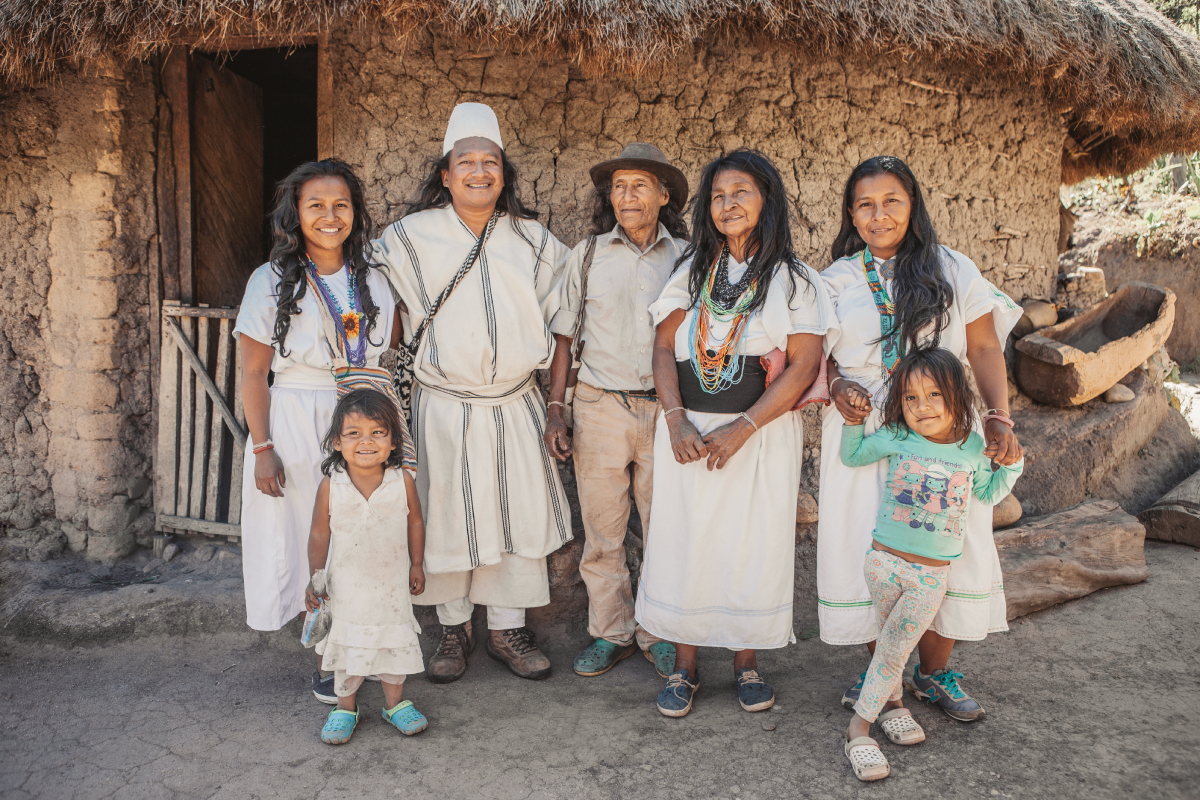
3️⃣ NATURE & ANCESTRAL ECOLOGY
The deep relationship between the Mayan people and the living world.
Categories:
- Mayan Nature & Animals Library
- Medicinal Plants (Coming soon)
- Sacred Natural Sites (Coming soon)
4️⃣ ARCHITECTURE & SCIENCE
Structures, astronomy, engineering, and spatial knowledge.
Categories:
- Mayan Architecture
- Sacred Geometry & Astronomy (Coming soon)
- The Sacred Count: Tzolk’in
- At the core of the Mayan Calendar is the Tzolk’in, a 260-day sacred cycle composed of 20 day signs and 13 numbers. Each day carries unique energy, symbolism, and guidance for personal growth, community rituals, and spiritual practice.
- Daykeepers, known as Ajq’ij or Aj K’ij, use the Tzolk’in to offer blessings, ceremonies, and guidance, aligning individual and collective life with cosmic rhythms. Each person is born under a specific day sign and number, which shape their personality, life purpose, and spiritual path. The Tzolk’in also guides the timing of ecological and medicinal practices, ensuring that herbal remedies, healing ceremonies, and agricultural cycles are in harmony with cosmic forces.
- The number 13, central to the Tzolk’in, symbolizes cosmic completeness and transformation, while the combination with the 20 day signs creates a vibrational calendar that reflects the interconnection of all life. Scholars and anthropologists recognize this as one of the most sophisticated cyclical timekeeping systems of the ancient world (Aveni, 2001; Coe & Van Stone, 2005).
5️⃣ HISTORICAL & GEOGRAPHIC CONTEXTS
Rooted in place, the Maya worldview connects identity to land and lineage.
Categories:
- Yucatán Municipalities: List and Meanings in Maya
- Maps, Territories & Kingdoms (Coming soon)
🗂 Featured Articles (So Far)
These are the individual entries currently published in the library:
- About the Mayan Library of Nature & Knowledge.
- Preserving Mayan Languages: Yucatec, K’iche’, Q’eqchi’, Tzotzil & More.
- The Mayan Calendar.
- The Mayan Nahual.
- The Popol Vuh (Popol Wuj).
- The Mayan Numbers.
- Mayan Architecture.
- Mayan Ancient Knowledge Keepers.
- Mayan Nature & Animals Library.
- Yucatán Municipalities: List and Meanings in Maya.
🔮 Coming Soon
- Interactive audio sections in Mayan languages.
- Downloadable teaching materials.
- A Kids’ Library version.
- Contributor corner and scholar resources.